Automated Patch Clamp Services
Functional ion channel screening tailored to your drug discovery programme
Automated patch clamp services provide direct, functional measurements of ion channel activity while allowing more compounds, concentrations and experimental conditions to be investigated than is generally practical using manual patch clamp alone.
ApconiX provides flexible automated electrophysiology support for ion channel screening, compound profiling and assay development. Our scientists work with each client to understand the project question, select an appropriate experimental approach and help interpret the resulting data within the wider drug discovery or safety programme.



What is automated patch clamp?
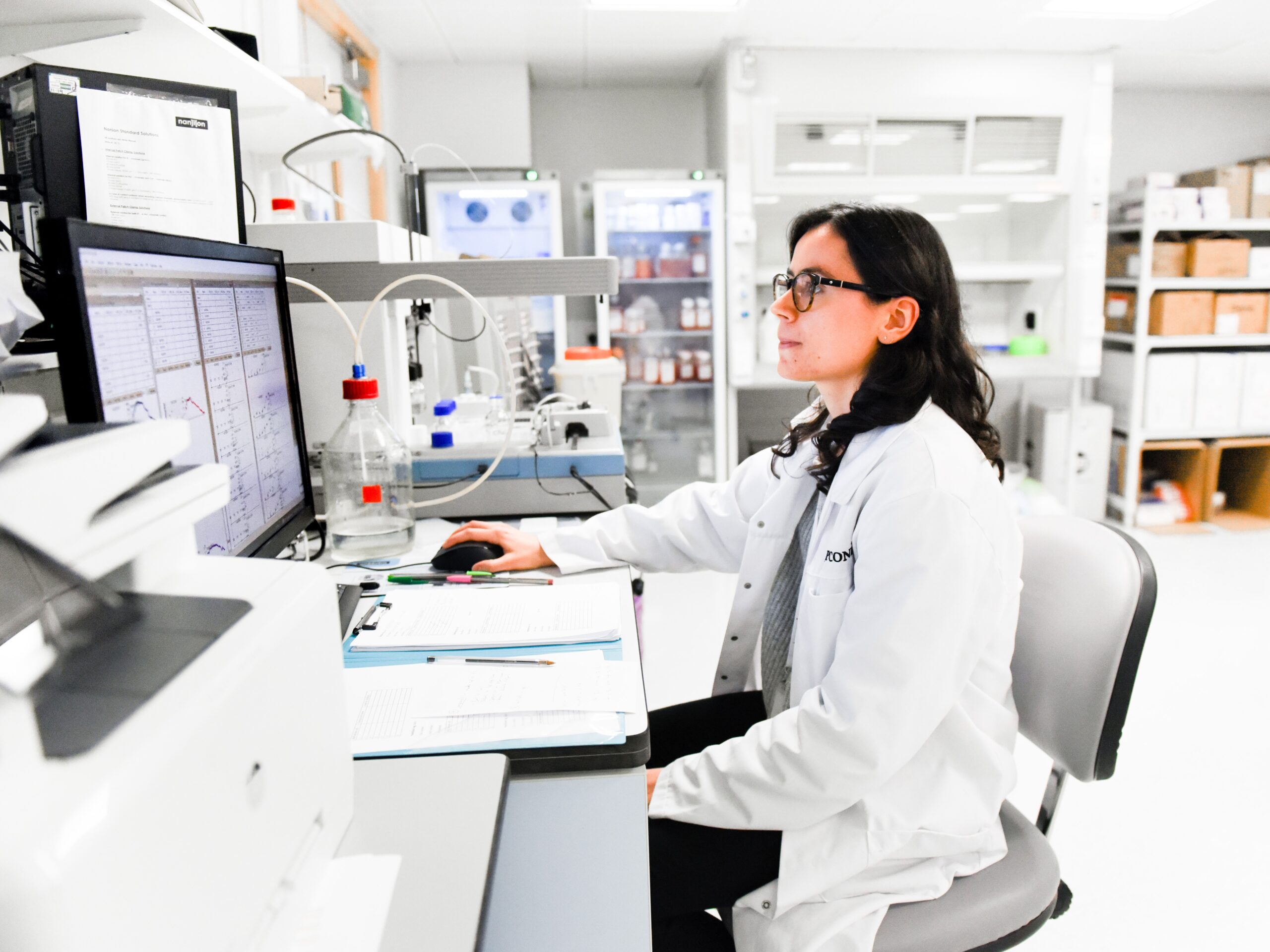
Patch clamp electrophysiology measures the electrical currents produced by ion channels in living cells. These measurements can show whether a test compound inhibits, activates or otherwise alters the function of a particular ion channel.
Traditional manual patch clamp uses a glass pipette, microscope and micromanipulator to form a seal with an individual cell. It can generate highly detailed recordings, but the technique is technically demanding and can limit the number of compounds and experimental conditions that can be assessed.
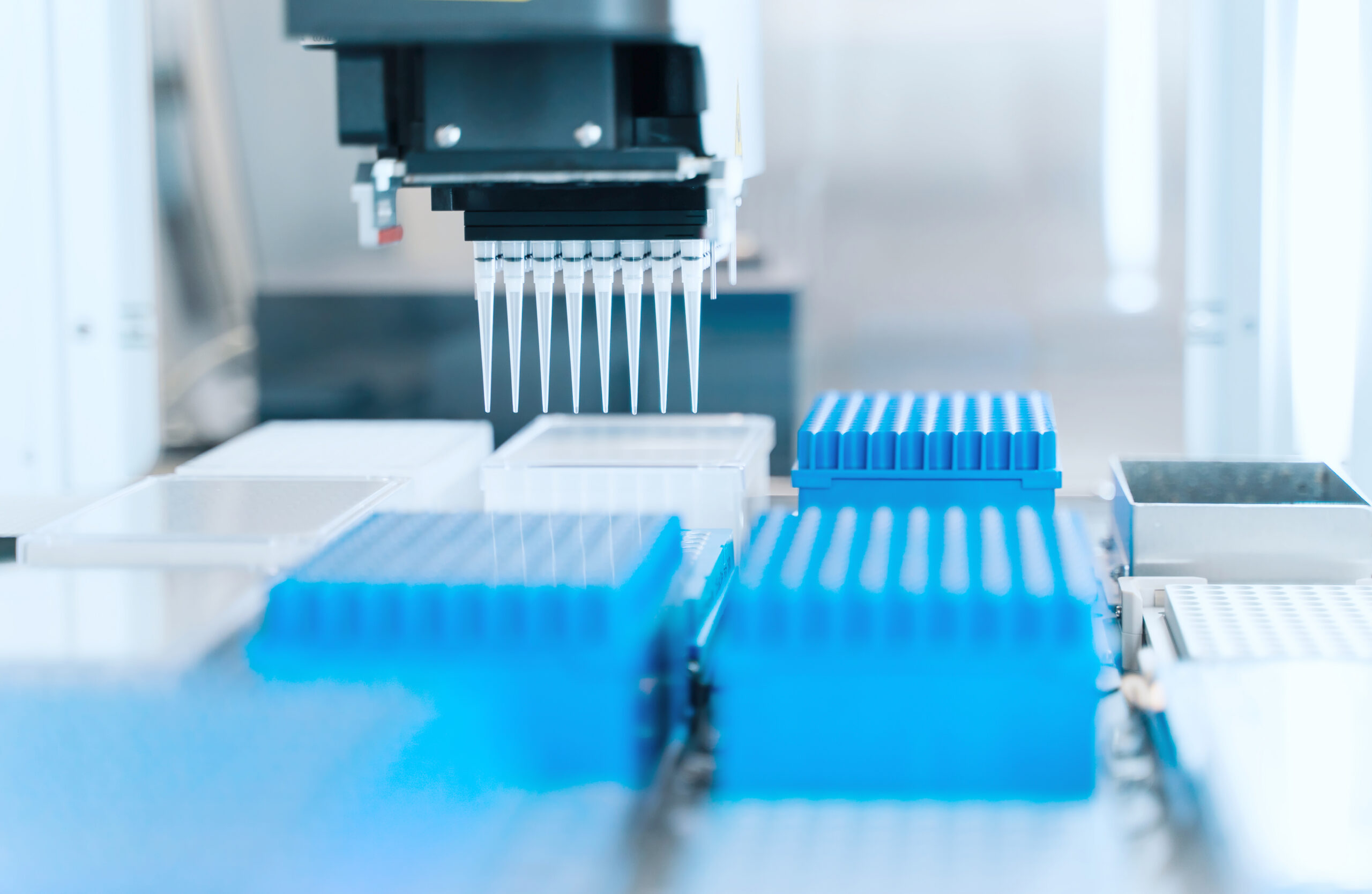
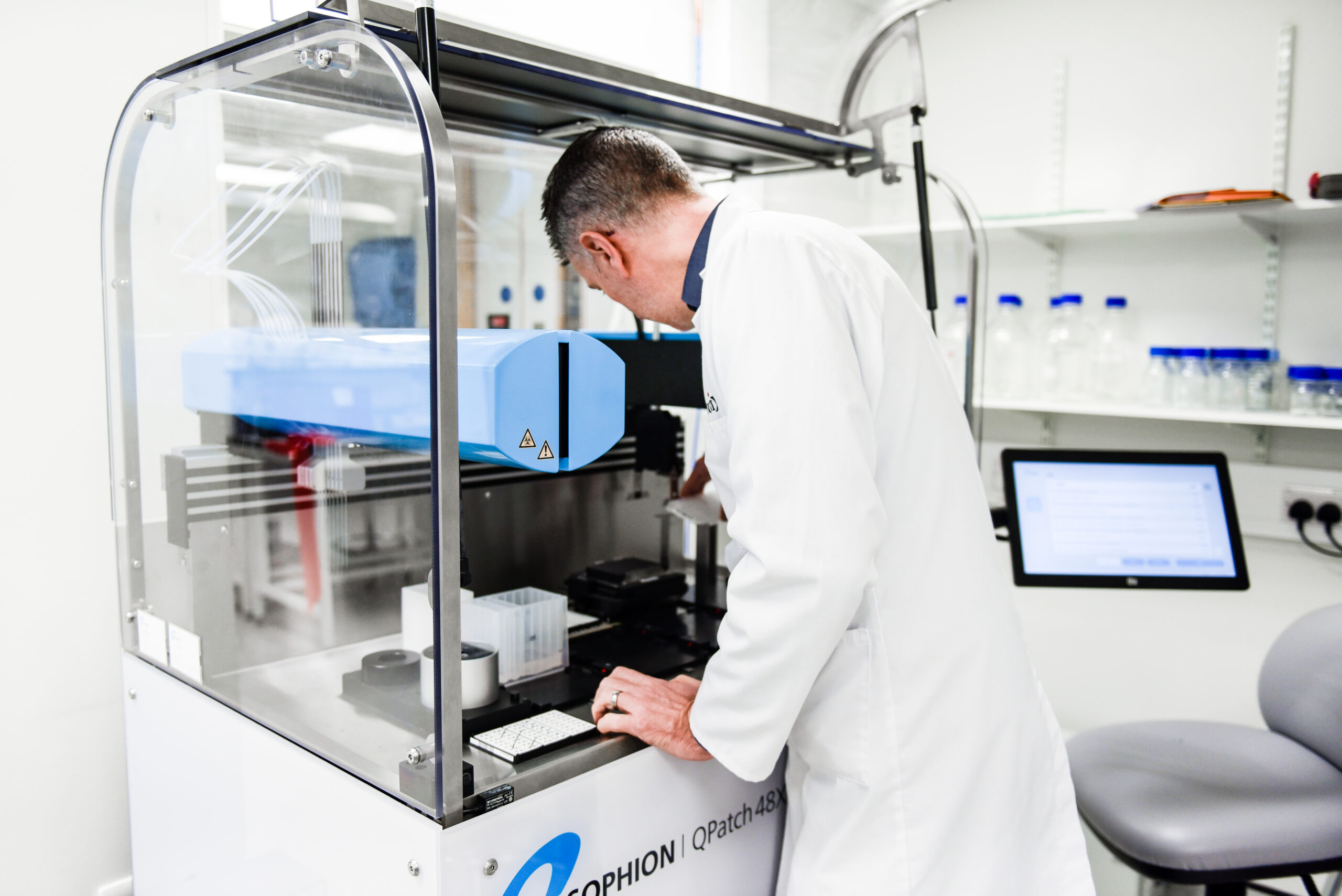
Automated patch clamp replaces several manual steps with specialised recording systems. Cells are captured on planar recording sites, solutions and test compounds are applied in a controlled process, and electrical activity is recorded using defined protocols. This allows functional ion channel data to be generated with greater throughput while retaining the core principles of patch clamp electrophysiology.
When can automated patch clamp be useful?
Automated patch clamp can support different questions across drug discovery and safety assessment. Depending on the target, assay and project stage, it may be used for:
- Screening compounds against a selected ion channel
- Comparing activity across multiple compounds or concentrations
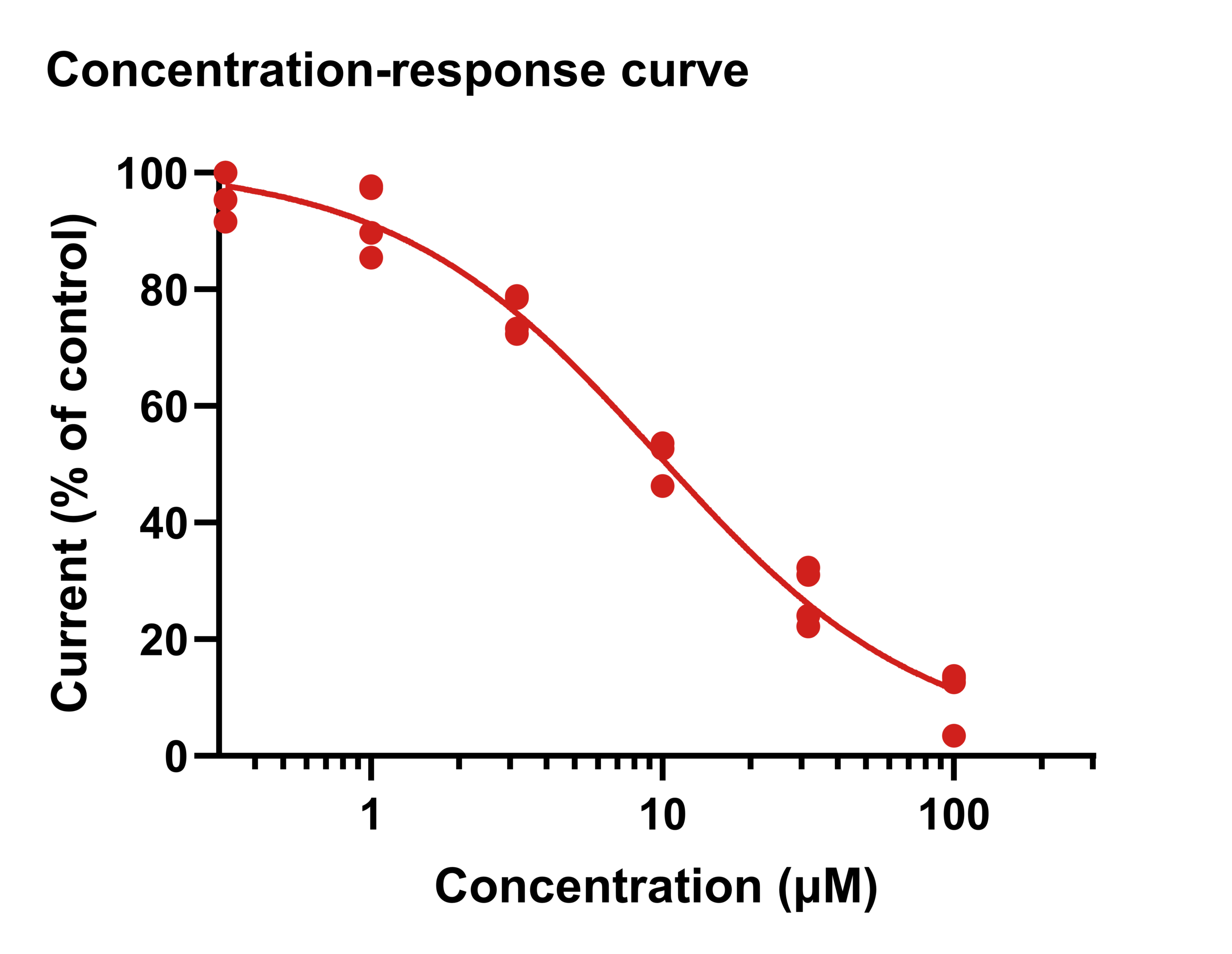
- Generating concentration response data
- Investigating potency and selectivity
- Profiling potential activity against additional ion channels
- Following up findings from earlier screening
- Supporting structure activity relationship programmes
- Developing or optimising ion channel assays
- Generating data for specialist cardiac, Central Nervous System (CNS), vascular or pain related assessments
The appropriate approach will depend on the scientific question, the ion channel being investigated, the available cell system, the number of compounds and the level of detail required.
How is an automated patch clamp study designed?
Every project begins with a discussion about the decision the data needs to support. The ApconiX team can then help define the ion channel target, assay format, compound numbers, concentration range, controls, recording protocol and required analysis.
Studies may use an established assay or require adaptation for a particular target or project question. Factors such as compound solubility, application method, cell health, channel expression and recording conditions can all influence the final study design.
Agreeing these details before experimental work begins helps ensure that the resulting data are appropriate for the intended use and can be interpreted within the wider project context.
Data quality and scientific interpretation
Electrophysiology data can be affected by biological and experimental variability. Cell quality, channel expression, seal quality, solution composition, compound application, recording protocol and analysis method can all influence assay performance.
For this reason, automated patch clamp data should not be considered in isolation from the experimental conditions in which they were generated. Appropriate controls, predefined acceptance criteria and scientific review are important when comparing compounds or drawing conclusions from concentration response data.
ApconiX combines automated electrophysiology with experienced scientific interpretation. This helps clients understand what the results show, identify any important limitations and decide whether further investigation may be useful.
Automated or manual patch clamp?
Automated and manual patch clamp use the same underlying electrophysiological principles, but they can support different project needs.
Automated patch clamp is generally suited to studies requiring more compounds, concentrations or experimental conditions. Manual patch clamp may be more appropriate when a highly specialised protocol, unusual cell preparation or more detailed investigation is required.
The most suitable method depends on the ion channel, project stage and question being addressed. Where relevant, ApconiX can help clients determine whether automated patch clamp, manual patch clamp or a combination of approaches is most appropriate.

Why choose ApconiX for automated patch clamp?
ApconiX provides access to scientists with expertise in ion channel biology, electrophysiology, drug discovery and nonclinical safety.
Rather than applying the same study design to every programme, the team works with clients to understand the purpose of the study and tailor the experimental approach accordingly. Automated patch clamp can also be connected with wider ApconiX services where additional cardiac, CNS, Microelectrode Array (MEA), in silico or investigative evidence is required.
The objective is not simply to generate an assay result, but to provide data that can contribute to a better informed project decision.
Related ion channel laboratory services
Automated patch clamp is one part of the wider ApconiX ion channel laboratory offering. Depending on the programme, related services may include:
- Manual patch clamp
- Ion channel screening
- Cardiac safety assessment
- CNS safety assessment
- hERG screening
- Comprehensive In vitro Proarrhythmia Assay (CiPA) related ion channel assessment
- MEA screening
- In silico cardiac safety modelling
- Specialist ion channel panels
- Bespoke assay development
Each specialist service page provides more information about its application, study options and scientific purpose.