
Sedation Ion Channel Panel for Drug Discovery

Sedation and fatigue can be unintended effects of drug candidates and may influence tolerability and development decisions. Ion channels underpin the function of the CNS, and a wide range of mechanisms are known to trigger sedation. For drug candidates that cross the blood–brain barrier, understanding their potential interactions with CNS-relevant ion channels can therefore be important during early drug discovery.
ApconiX’s Sedation Ion Channel Panel uses automated patch-clamp electrophysiology to evaluate compound effects across a suggested panel of nine human CNS-relevant ion channels. A systematic approach based on genetic and pharmacological evidence was used to select these sedation-relevant targets. The service can help identify potential ion-channel liabilities, investigate possible mechanisms and inform whether additional CNS safety assessment may be appropriate. Panel composition and study design can also be tailored to the project question, with results interpreted by ApconiX scientists alongside the available compound and project information.
Which Ion Channels Are Included in the Sedation Ion Channel Panel?
The iLA sedation panel is screened using automated patch-clamp electrophysiology (Patchliner, Nanion Technologies or QPatch II, Sophion Biosciences). The panel is customisable and can be tailored to suit your particular needs
Swipe or scroll sideways to view all nine targets.
| Panel | KV1.1 | KV2.1 | KV3.1 | KV7.2/7.3 | KCa1.1 | NaV1.2 |
GABA α1β2γ2 |
Nicotinic α4β2 |
K2P2.1 |
|---|---|---|---|---|---|---|---|---|---|
Sedation Panel

|
● | ● | ● | ● | ● | ● | ● | ● | ● |
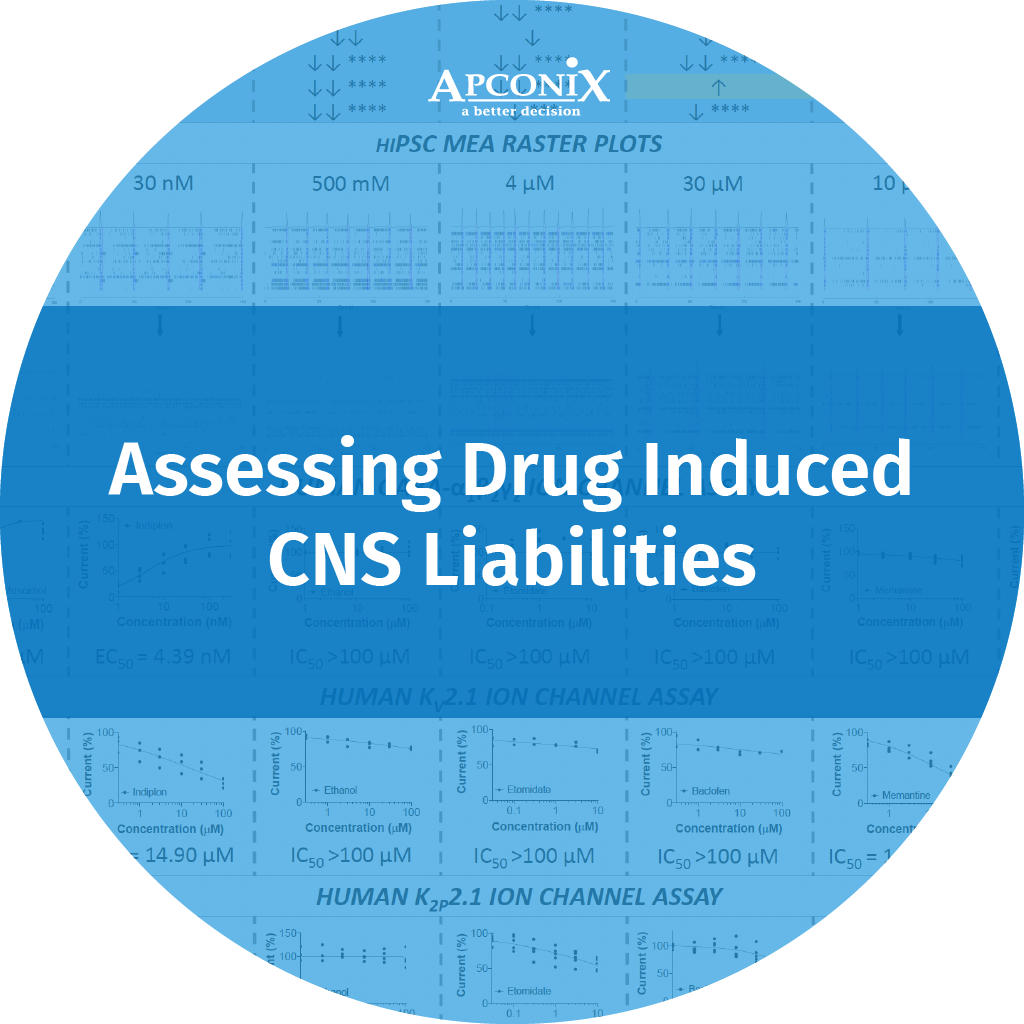
“Utilising In Vitro Assays to Assess Drug-Induced Central Nervous System Liabilities” a poster by Dr Louisa Zolkiewski
Benefits of the Sedation Ion Channel Panel
Work with us to benefit from our broad expertise in project toxicology, hiPSC-neuronal cell models and ion channel electrophysiology. We can help you determine risk, understand underlying molecular mechanisms and focus on the most promising drug candidates in the next steps of your process.
Here are the benefits:
- Quick turnaround time (14 days from when we receive your compound) of our high-quality ion channel profiling
- Reduced reliance on costly animal model studies that don’t always translate well to human with our high-throughput assays
- Bespoke, expert guidance at your fingertips with access to ApconiX scientists who can help guide you moving forward
Sedation Ion Channel Panel Study Requirements and Deliverables
What We Need From You:
The Sedation Ion Channel Panel can be screened using 2–3 mg of compound, supplied either as a solid or in solution.
What You Will Receive:
Within 14 days of compound receipt, you will receive a comprehensive report. High-quality IC₅₀ values will be generated using automated patch-clamp technology and accompanied by expert scientific interpretation.
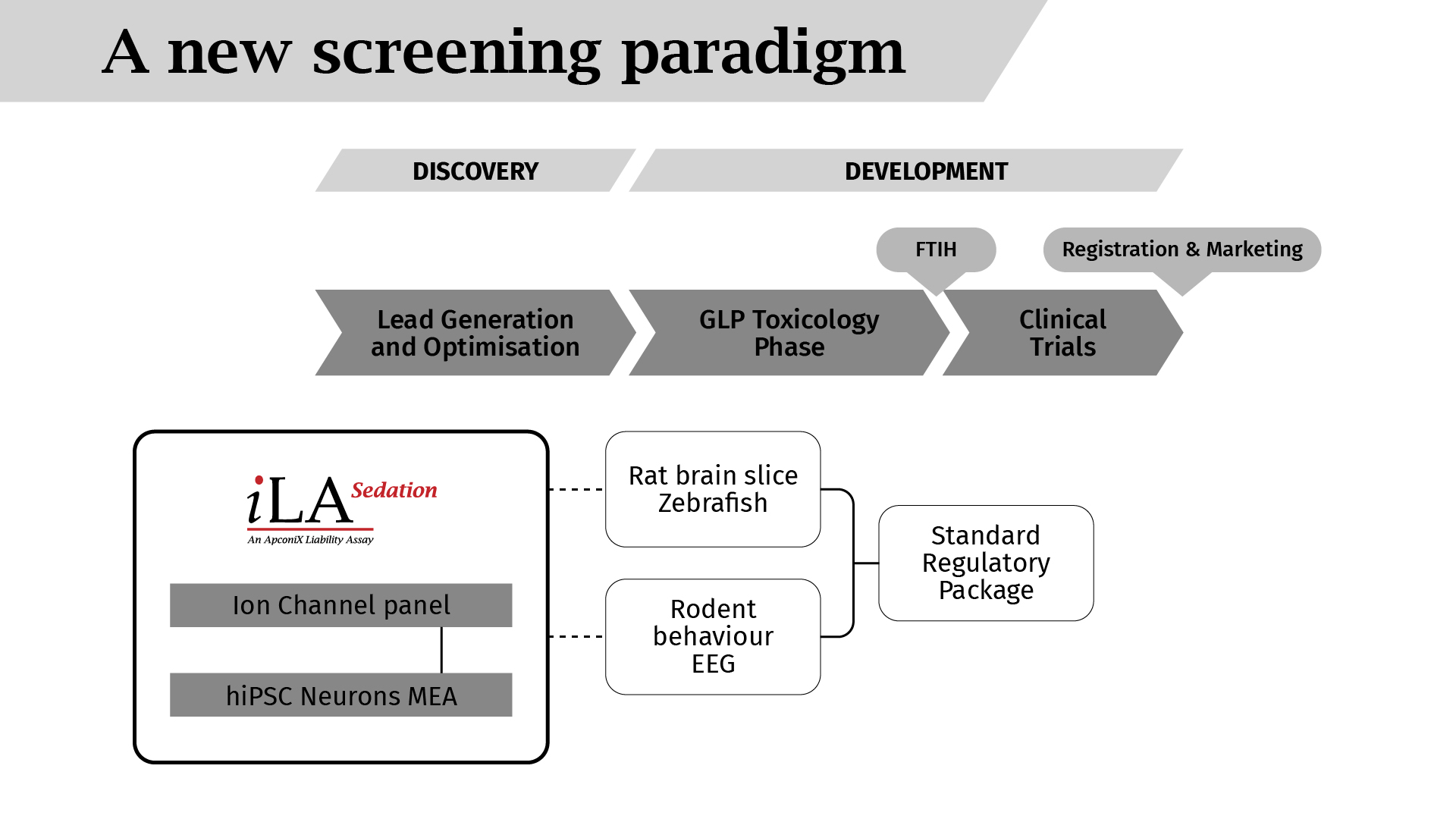

Combining the Sedation Ion Channel Panel with MEA
The Sedation Ion Channel Panel can be combined with the Sedation MEA Assay to provide phenotypic insight into the potential sedative properties of a compound. The MEA assay records electrical activity in human-derived neuronal cultures before and after compound addition. Combining target-level ion-channel data with neuronal-network activity can provide a more integrated assessment of potential sedation liability.