
Measurement of recovery from block in voltage-gated sodium channels and Vaughan-Williams classification
Our laboratory has significant expertise in electrophysiology assays. Patch-clamp defines the study of a single ion channel type, in a single cell.
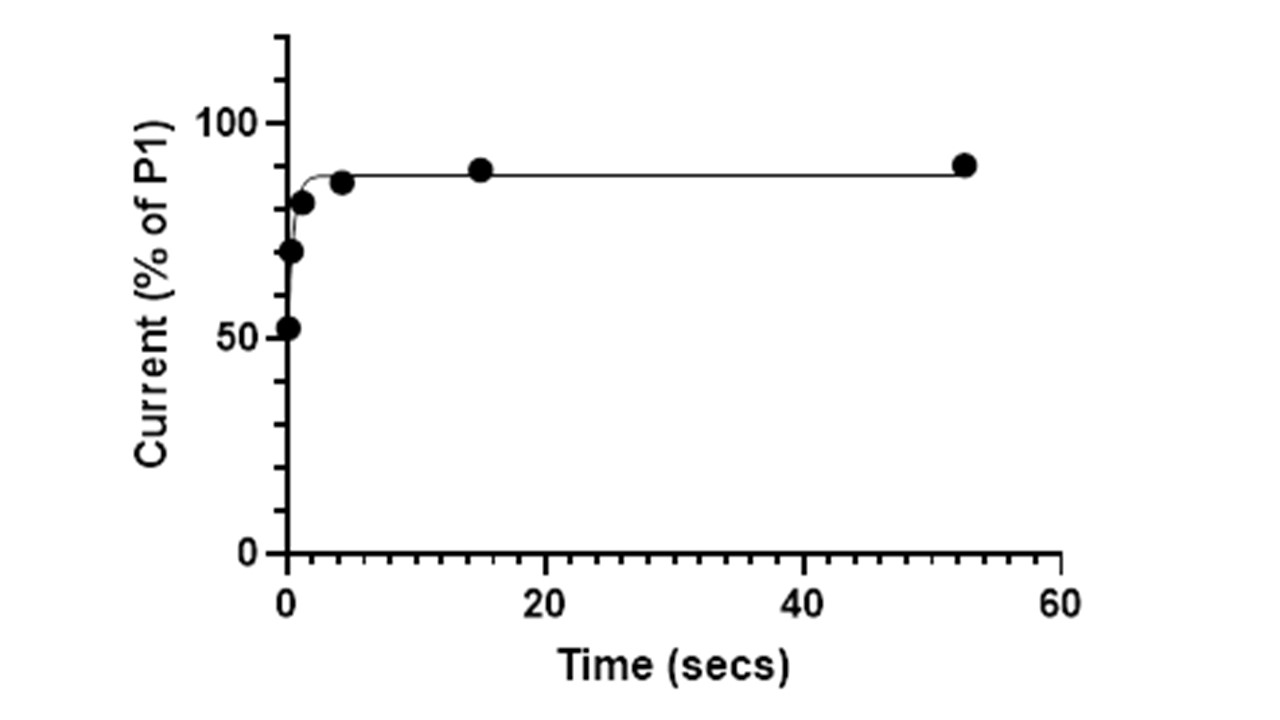
Graph showing recovery from sodium channel block, 30uM mexiletine
The understanding of cardiac arrythmias is critical to drug discovery. Decades of work have increased our understanding of the role of hERG potassium channel in QT prolongation and testing strategies have evolved to identify and reduce the liability through lead optimisation (Pollard et al., 2008). More recently, the CiPA paradigm has expanded the focus to a wider panel of cardiac ion channels, coupled with in silico modelling and human cardiomyocyte studies to define the pro-arrythmic risk (Gintant et al., 2016).
Beyond this, the FDA have become increasingly interested in the functional consequences of blocking the cardiac sodium channel. It is now requesting studies to define the recovery from block and classify drugs according to the Vaughan-Williams scheme (Lei et al., 2018).
In our laboratory we are able to measure recovery from block by automated patch-clamp. The test item is studied alongside quinidine, mexiletine and flecainide which show fast, medium and slow recovery kinetics, respectively.
Experiments are performed at near physiological temperature. These studies are non-GLP but can be used for regulatory submission.
