
What Are New Approach Methodologies (NAMs)?
New Approach Methodologies (NAMs) are innovative testing methods used to evaluate the safety, efficacy, and toxicity of drugs and chemicals. They aim to reduce or entirely replace traditional animal testing whilst providing human relevant data. By using methods that directly model human biology, NAMs enable developers to better assess real world safety and efficacy. Their use is actively encouraged by regulators such as the U.S. Food and Drug Administration and European Medicines Agency.
Read selected papers on NAMs below:

What are some examples of NAMs?
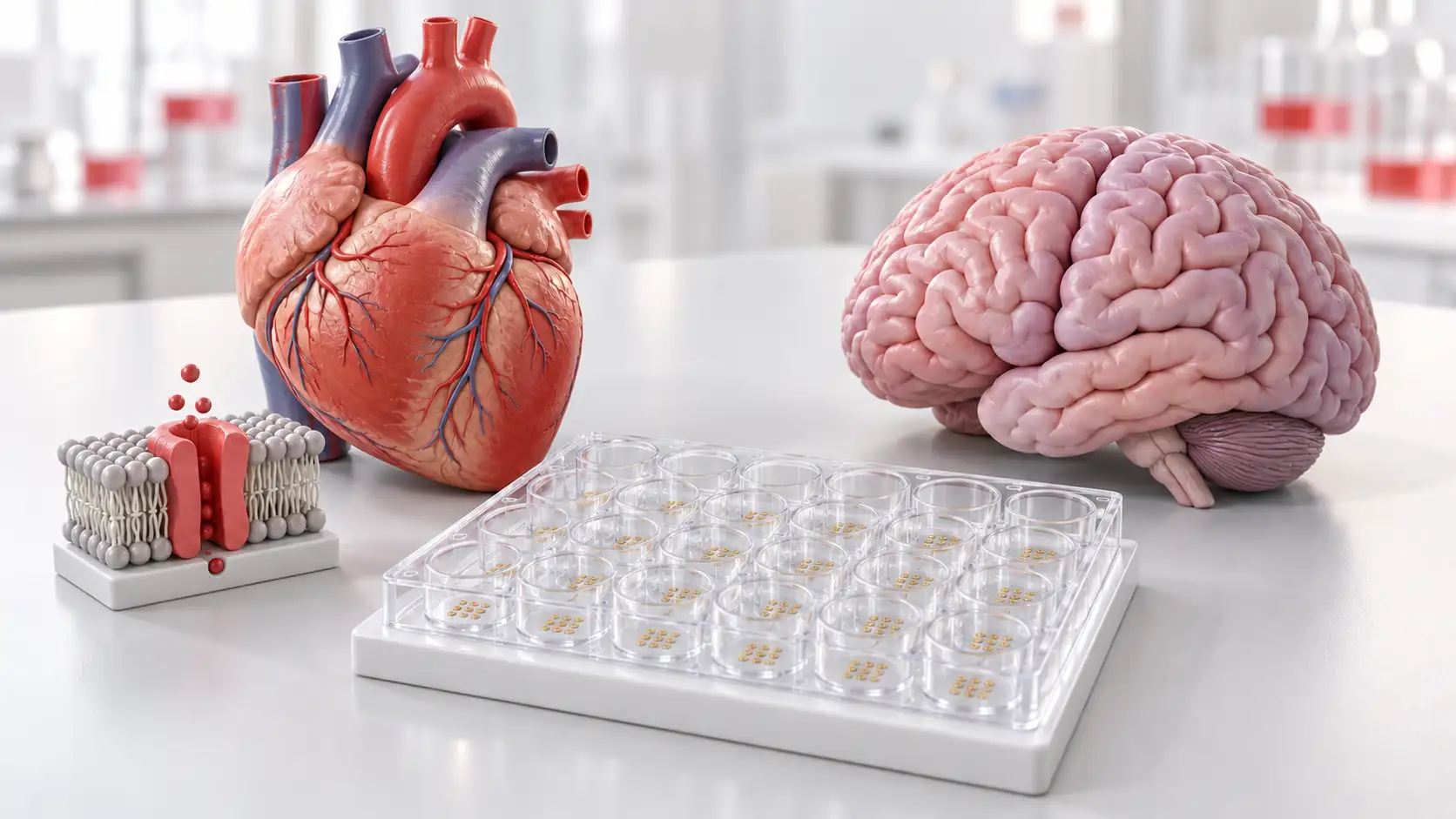
NAMs in drug development use cutting edge, human relevant systems to assess the safety and efficacy of new drugs and chemicals. These include:
- In vitro assays: Cell based systems, 3D tissue cultures, and organoids grown in the laboratory
- Organ-on-a-Chip: Microfluidic devices that aim to replicate the mechanical, physical, and biochemical functions of human organs
- In silico modelling: Advanced computational models, artificial intelligence (AI), and machine learning (ML) used to predict toxicity and biological responses
- Omics & biomarkers: Profiling how chemicals affect human genes, proteins and metabolic pathways



Why and where are NAMs used?
NAMs in drug discovery are used because they provide:
- Earlier risk identification: traditional late stage preclinical animal testing fails to predict human toxicity over 90% of the time and is highly resource and time intensive. Front loading safety assessment using NAMs enables early and effective risk identification
- Ethical progress: NAMs address ethical issues by advancing the 3Rs principles: Replacement of animal use, Reduction in the number of animals required, and Refinements to procedures to minimize suffering
- Increased human relevance: NAMs model human biology directly. Animal models don’t always accurately predict how a drug or chemical will interact in the human body
- Mechanistic insight: NAMs can be used to model cellular pathways, molecular interactions, and disease dynamics directly in human systems
- Increased efficiency: NAMs are usually faster and more cost-effective than lengthy animal studies, thus accelerating research and screening phases
Evidence gathered from NAMs, therefore, is crucial in supporting successful drug discovery and development decisions.
Explore NAMs services at ApconiX
Discover how ApconiX applies new approach methodologies through specialist ion channel screening, microelectrode (MEA) studies, and integrated cardiac and seizure safety assessment:
- Ion Channel Panels: Identify off target ion channel activity and potential safety liabilities earlier in drug discovery
- MEA Screening: Measure changes in electrically active cell networks using functional, label free multielectrode array assays
- Cardiac Safety: Combine hERG, the Comprehensive in vitro Proarrhythmia Assay (CiPA) ion channel panel, cardiac MEA and in silico evidence to investigate proarrhythmic risk
- Seizure Safety: Integrate ion channel and neuronal MEA approaches to investigate seizure liability and CNS risk
Our scientists can support you in selecting the right approach, interpreting the results in the context of your wider programme and identifying practical next steps.

What is being done to increase adoption and usage of NAMs?
Global regulatory agencies are increasingly updating their policies to accept and encourage the use of NAMs.
- UK: The government announced their landmark Replacing animals in science strategy in 2025 which aims to support the development, validation and uptake of alternative methods. The NC3Rs and Innovate UK are key organizations driving this strategy
- USA: Following on from the FDA Modernization Act 2.0 in 2022 the FDA has released strategic frameworks (e.g. the iSTAND program) which is designed to evaluate and streamline the use of NAMs for nonclinical drug testing
- EU: The Medicines Agency (EMA) and the European Chemicals Agency (ECHA) are actively fostering regulatory acceptance to reduce dependency on animal models
NAM Research at ApconiX
At ApconiX, we are passionate about finding effective and safe alternatives to animal testing in drug discovery. We pride ourselves in being a research driven organisation and regularly publish the results of our active research on the use of NAMs in toxicology and drug discovery in peer reviewed journals.
Take a look at some of our most recent publications:




NAMs FAQs
Want to find out more?
Take a look at our specialist NAMs services or get in touch below.