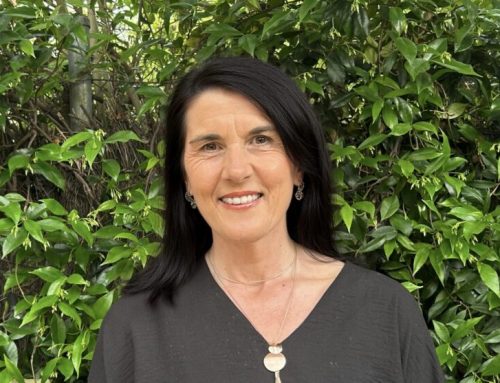
An Interview with Dr Emma Bishop

In this post, we’ll be speaking with Dr Emma Bishop, a Senior Scientist on the immunotoxicology team at ApconiX. Emma updates us on her latest projects and research, as well as giving us some insight on her career development so far.
So, I have it on good authority that you’re a diehard Immunologist Emma. Do you remember when and where that passion first began?
[Laughs] Absolutely, I am!
I think I first realised how much I enjoyed the subject when I did a summer project between my second and third year in immunology during my undergraduate degree in Biomedical Sciences at the University of Birmingham. This project was also my first real introduction to the lab.
I loved the research area so much that I then pursued it for my dissertation.
What specifically piqued your interest in immunology at that stage?
I suppose I’ve always loved how biological processes and components are involved in immunology: all of the different cell types, all of the different cytokines and all of the communication between them. I also love that this area of biology is so easy to apply to everyday life; when you experience inflammation from an injury, like a scratch, it’s so fascinating to understand what’s going on and to see it progressing visually.
I’ve heard that you had a paper published on TNF-α signal dysregulation in rheumatoid arthritis in Science. Congratulations, that’s a fantastic achievement. How did it come about?
Thank you, it was great to see our work published. I studied for my PhD through the Doctoral Training Programme at the University of Birmingham. That programme consisted of an initial master’s year with three rotation projects and then I could choose one to focus my thesis on. During my research, I identified a novel role for the inflammatory cytokine TNF-α as part of CD4+ T cell metabolism and function and investigated this dysregulation in the context of rheumatoid arthritis.
I notice from your Google Scholar profile that you have quite a few peer reviewed publications in immune research?
Yes, I’ve been very fortunate to have been part of research labs that have been doing some really exciting and collaborative work. During my Masters, I published my work on regulatory effects on the immune system by vitamin D in Immunology, and was able to publish reviews in both my Master’s and PhD subject areas in JBMR Plus and .
How did you first get involved in toxicology?
Researching anti-TNF treatment in rheumatoid arthritis was my first introduction into the more therapeutic side of disease biology. When I later joined Redx Pharma I worked across multiple oncology projects at all different stages of drug development: from screening compounds, to cell assays, and candidate nomination in vivo studies. At this point in my career, I had a growing awareness of toxicology as I was now working in the drug development space.
Oncology research was quite a change in direction for you, Emma. Was this something you enjoyed?
Yes, it was something I enjoyed. I mean, immunology is very much linked to oncology, so there was quite a lot of crossover. For example, I particularly enjoyed analysing blood samples from clinical trial patients for changes in immune cell populations.
But, yes, the focus on oncology was something different for me and I found it interesting. Having that experience of working in oncology has helped me broaden my expertise which is very useful to have in my current role.
Sounds fascinating! What then attracted you to come and work at ApconiX?
Oh, it was.
But when I saw a job advertised for a senior scientist for the immunotoxicology team at ApconiX nothing could stop me [chuckles]!
I suppose I was very keen to get back to my immunology roots. And ApconiX has deep links with many different academic institutions across the UK. Sean Hammond, Immunotoxicology Lead, has been amazing at bringing me in on his own projects and research at the University of Liverpool, for example.
We’re so pleased to have you! Tell me, what have you been up to so far?
Well, I was specifically hired to support the writing of target safety assessments (TSAs), and my specialism in immunology was useful because those TSAs can sometimes be quite different to other topics — especially when it comes to immune modalities.
Although I’m a trained immunologist, my background isn’t in toxicology, so I’ll admit, there was a learning curve, especially in understanding the detailed way ApconiX approaches TSAs [Emma smiles].
But now, thanks to all of my learning at ApconiX, I can support the writing of immunotoxicology TSAs across the whole team.
For example, I’m currently building a guidance document for all the immune targets and for immune modalities we encounter when building TSAs, so we promote the continuous professional development of authors who might have specialisms in backgrounds that aren’t in immunology.
So, not only have you been learning how to write the target safety assessments from an immunotoxicology point of view, but you’re now training others?
Yes! I think this is important because other TSA authors might not necessarily have expertise in immunotoxicology — even if they are very experienced. And even if the TSA is not immune focused, there can quite often be immune effects across a range of targets that can still be part of the TSA. Having that understanding improves everything across the board.
ApconiX really supports us in sharing our expertise amongst the whole team — which means we can better meet the needs of our clients.
It sounds like ApconiX really values your specialist expertise in immunotoxicology, Emma. I’ve heard that you’re also now engaging in more client facing aspects?
Yes, ApconiX is really helping me to translate my research background in immunology to toxicology. I’ve really enjoyed being part of client consultancy toxicology meetings with Sean. For example, there was one project in particular that had a focus on immunometabolism — which is what my PhD focused on. It was really exciting to have the chance to use my previous experience to provide high quality, specific expertise directly to a client project.
We’re so glad that you’ve found your groove here Emma! So finally, is there anything you’re particularly looking forward to working on in the future here at ApconiX?
There are a few exciting things going on at the moment.
The lab team have an multielectrode assay (MEA) for screening CNS related drug toxicity. Sometimes, they get asked questions about drug resistant epilepsy which has a basis in neuroinflammation — so they’re looking at incorporating an inflammatory environment within the MEA assay to try and recapitulate that.
— we have generated some promising data already.
We’re also working with the data science team to incorporate additional immunology focused capabilities to the services we already offer — so we can.
You can find out more about Emma Bishop, the immunotoxicology team, and safety science at immunotoxicology.